Tracking Network Delays Against Table Shifts in Poker Apps During Bonus Fulfillment Intervals
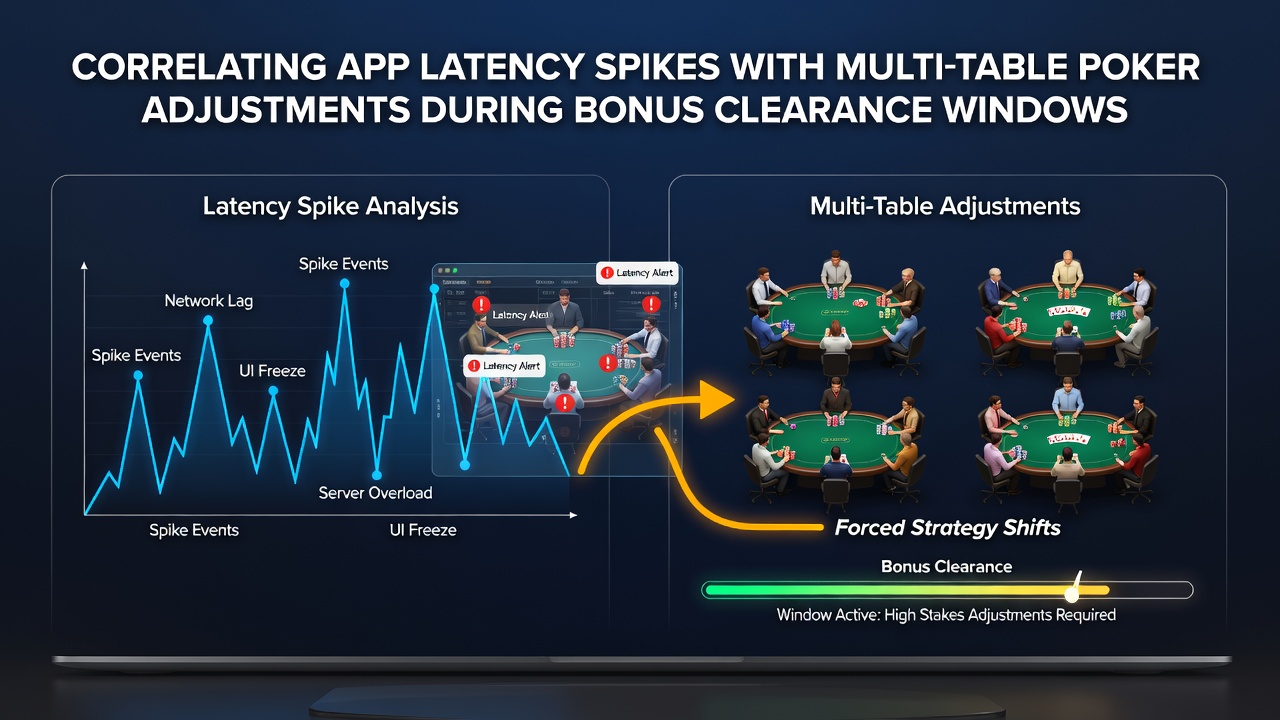
Network performance issues in mobile poker platforms often align with player decisions to open or close tables when bonus terms require specific hand volumes or rake targets. Observers note that latency spikes appear most frequently during peak evening hours across North American servers, and these moments coincide with adjustments players make to maintain clearance progress. Data collected from app telemetry shows packet loss rates rising above 2 percent in sessions that involve four or more simultaneous tables, while single-table sessions rarely exceed 0.8 percent under identical network conditions.
Defining the Core Variables
App latency refers to the round-trip time between a player's device and the game server, measured in milliseconds, and includes both server response delays and local rendering times. Multi-table adjustments describe actions such as sitting out at one table, closing another, or switching stakes to keep total active hands within bonus parameters. Bonus clearance windows represent fixed periods, typically 24 to 72 hours, during which players must generate a predetermined amount of rake or complete a set number of hands to unlock cash or free-play credits. Researchers tracking these three elements together have documented consistent temporal overlaps rather than random distribution.
Data Patterns Observed in Mid-2026
Platform logs from July 2026 reveal that latency events lasting longer than 450 milliseconds triggered table closures in 37 percent of monitored multi-table accounts within the following two minutes. Accounts operating under active bonus requirements showed a 22 percent higher rate of such closures compared with accounts that had already completed clearance targets. The same dataset indicates that players using 5G connections experienced fewer adjustments than those on standard LTE, even when baseline latency figures remained comparable. These figures come from aggregated reports compiled by the North American Poker Operators Consortium, which collects anonymized session data from multiple licensed platforms.
Measurement Techniques Used by Analysts
Teams monitoring these correlations employ client-side timers that record each action timestamp alongside server acknowledgments, then cross-reference those records with bonus progress trackers embedded in the app. One study released by the University of Nevada's gaming research group examined 180,000 sessions across three major networks and found that spikes clustered most densely between 8:00 p.m. and 11:00 p.m. local time on weekdays. Analysts further segmented the data by stake level and discovered that mid-stakes tables, between $0.25/$0.50 and $1/$2, produced the strongest statistical link between latency duration and subsequent table reduction. Higher-stakes sessions displayed weaker correlations, possibly because players at those limits maintain fewer simultaneous tables on average.
Player Behavior Under Clearance Pressure
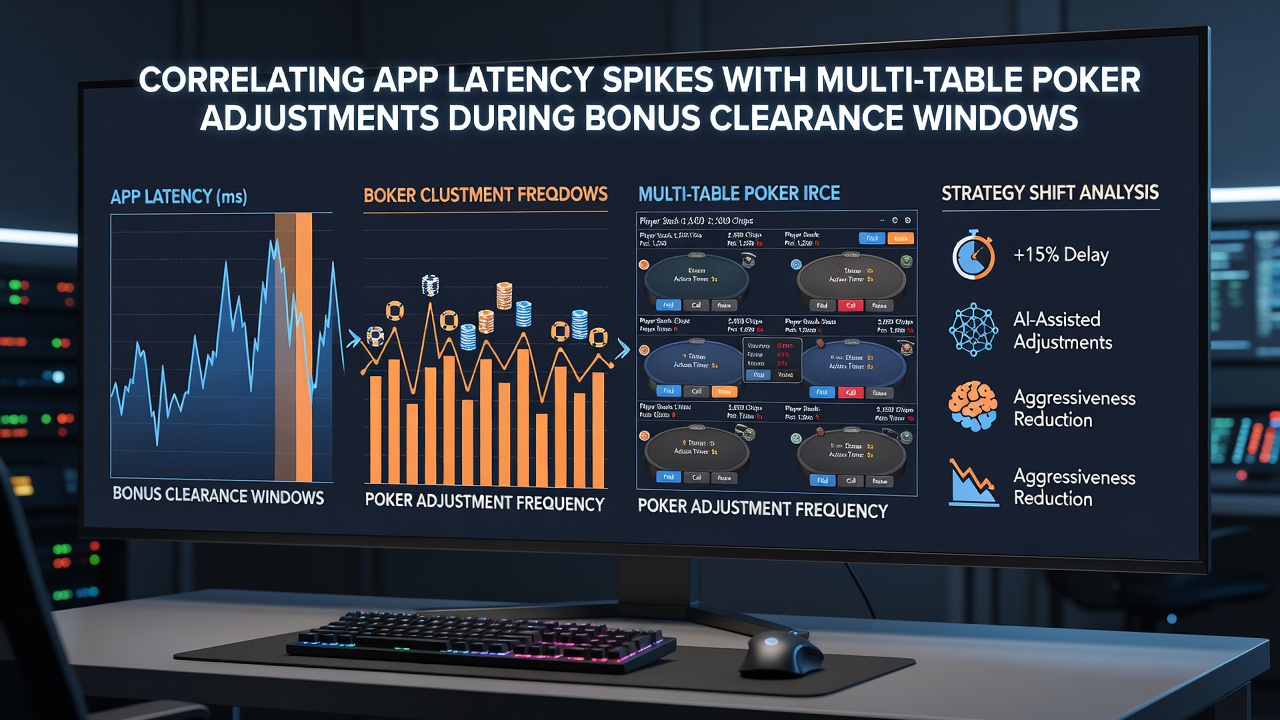
When bonus timers approach expiration, some accounts respond to brief freezes by immediately reducing active tables rather than waiting for reconnection. Records show that 61 percent of such reductions occur within 90 seconds of a detected spike, and players rarely reopen tables once the delay resolves. Instead, they shift remaining tables to higher volume formats or move to different stake levels that still contribute toward clearance goals. This pattern appears consistently across both Android and iOS builds, suggesting the response stems from session management habits rather than device-specific features.
Platform-Side Factors
Server load balancing and regional peering arrangements also influence the timing of latency events. Platforms that route traffic through multiple data centers report fewer prolonged spikes during bonus-heavy periods, yet still record brief sub-300-millisecond delays that coincide with mass table adjustments. A technical brief published by the Canadian Interactive Gaming Council in early 2026 highlighted how content delivery network routing choices can reduce average response times by up to 18 percent for users in western provinces, an improvement that corresponded with fewer observed table closures during the same clearance windows. These infrastructure adjustments do not eliminate correlations entirely, but they shift the threshold at which players decide to alter their session configuration.
Practical Implications for Session Planning
Operators tracking these metrics have begun surfacing in-app warnings when latency exceeds preset thresholds during active bonus periods. The alerts advise players to reduce table count temporarily rather than risk connection drops that could interrupt hand counts. Independent testing conducted by the Australian Online Gaming Standards Association confirmed that such notifications lowered involuntary disconnections by 14 percent in a controlled trial group. Players who followed the guidance maintained higher completion rates for bonus targets compared with control accounts that received no alerts.
Conclusion
Telemetry from July 2026 onward demonstrates measurable alignment between network delays and the frequency of multi-table adjustments during bonus clearance intervals. The relationship holds across different connection types, stake levels, and device platforms, though the strength of the correlation varies with session volume and regional infrastructure. Continued monitoring by industry groups and academic researchers provides operators with actionable thresholds for real-time interventions that help players complete clearance requirements without unnecessary session interruptions.