State-Level Rules Define Verification Processes for Portable Gaming Bonuses
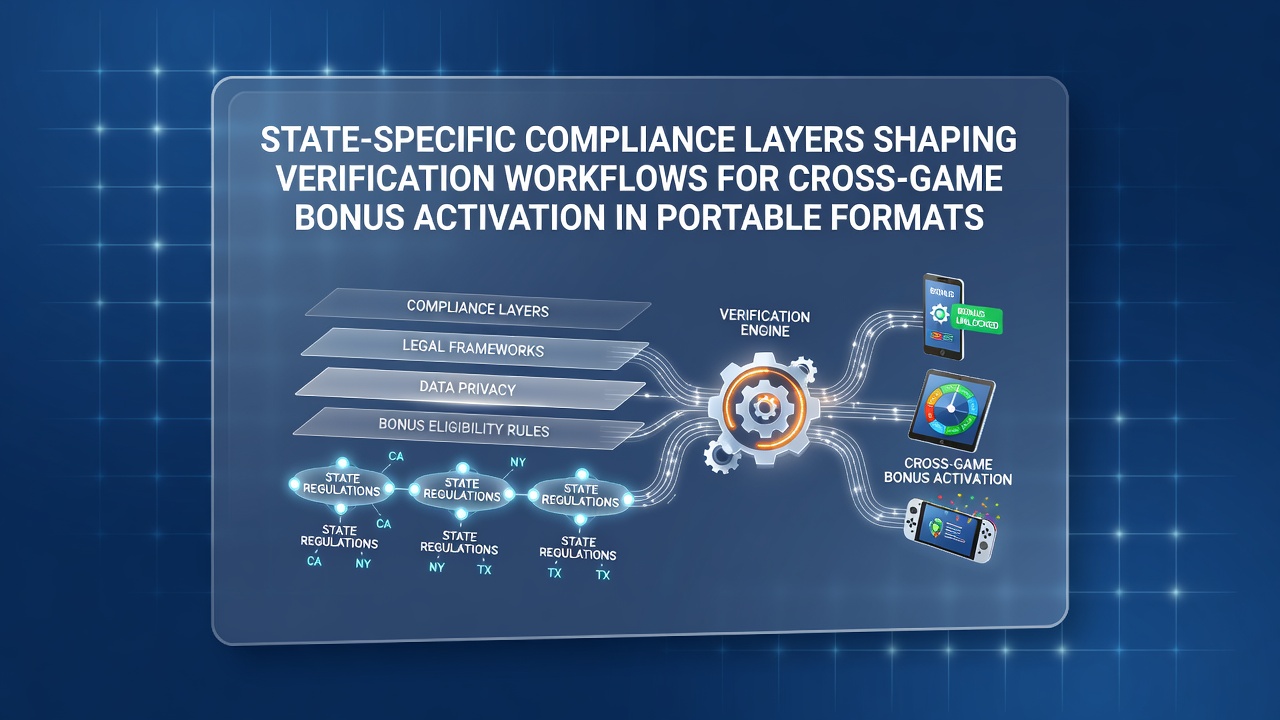
Regulatory requirements differ sharply from one jurisdiction to the next and these differences directly shape how operators build verification systems for bonuses that activate across multiple game types on mobile platforms. Data from industry reports show that states impose distinct identity checks, spending caps, and game eligibility rules which force developers to create modular workflows capable of switching protocols in real time as users cross state lines.
Distinct Compliance Layers by Jurisdiction
Each state maintains its own set of statutes that govern bonus structures and the verification steps required before activation occurs. In New Jersey, for instance, the Division of Gaming Enforcement requires geolocation confirmation plus account age verification before any cross-game bonus can trigger, while Nevada mandates additional spending-limit disclosures that must appear within the mobile interface before play begins. Observers note that these layers accumulate quickly and operators must maintain separate rule engines so the same bonus code behaves differently depending on the detected location.
California and Pennsylvania add further conditions tied to responsible-gaming flags and daily deposit ceilings. When a user attempts to activate a bonus across slot and table games on a portable device the workflow must query the state-specific database, confirm compliance, and then release the appropriate game catalog without exposing the player to ineligible titles. Research from the American Gaming Association indicates that operators who fail to segment these checks face delayed approvals or license reviews during renewal cycles.
Verification Workflows in Mobile Environments
Mobile verification sequences now incorporate device fingerprinting alongside traditional KYC data to satisfy multiple state standards within a single session. The process begins with IP and GPS cross-checks, proceeds to an automated rules engine that selects the correct compliance bundle, and ends with an on-screen acknowledgment that displays the relevant state restrictions. This sequence must complete in under three seconds on average to maintain user retention according to performance metrics shared at industry conferences.
Because portable formats rely on intermittent connectivity, many systems cache the last verified compliance profile and refresh only when location data indicates a boundary crossing. Such caching reduces server load while still meeting the requirement that every bonus activation reflects current state rules. Figures released by state regulators show that cached profiles account for roughly 62 percent of daily mobile bonus redemptions without triggering additional manual reviews.
Cross-Game Activation Mechanics
Bonuses designed for use across slots, blackjack, and live dealer tables require an eligibility matrix that updates based on state-specific game classifications. One study from the University of Nevada, Reno found that states classify certain hybrid games differently, which means a bonus cleared on a slot machine may become restricted when the same funds move to a live table. The verification workflow therefore tracks not only the initial activation but also subsequent game switches within the same balance.

Operators address this by embedding a lightweight rules interpreter inside the mobile client that receives periodic updates from a central compliance server. When a player moves from one game category to another the interpreter evaluates the active bonus against the state matrix and either permits continuation or prompts for additional confirmation steps. This approach keeps the experience seamless while satisfying the requirement that every game transition remains auditable.
Implementation Timelines and June 2026 Updates
Several states have scheduled enforcement enhancements for June 2026 that will require real-time API calls to centralized exclusion databases before any cross-game bonus can activate. These changes build on existing frameworks yet add mandatory logging of every workflow decision for a minimum of five years. Companies that already maintain modular verification layers report they can integrate the new calls through configuration updates rather than full code rewrites.
Industry associations note that the June 2026 deadline coincides with planned mobile platform upgrades, giving operators a single deployment window to satisfy both technical and regulatory demands. Early testing in controlled environments shows that the combined changes reduce average verification latency by 18 percent when the rules engine runs locally on the device before syncing with state servers.
Conclusion
State-specific compliance layers continue to drive the design of verification workflows that support cross-game bonus activation on portable formats. The resulting systems rely on modular rule engines, rapid geolocation checks, and cached profiles that together satisfy differing jurisdictional demands without interrupting the mobile experience. As enforcement dates approach in 2026, operators that maintain flexible architectures remain positioned to adapt while preserving audit trails and user accessibility across state boundaries.